WV Project CommuniTree

“Building Communities from the Roots Up”


Back to Forestry Main Page

Back to UTC Main Page


West Virginia Project CommuniTree (CTree) promotes tree planting and education on public land through volunteerism in the Potomac Headwaters of West Virginia (Berkeley, Grant, Hampshire, Hardy, Jefferson, Mineral, Morgan, & Pendleton counties).  The program also focuses on enhancing and promoting awareness of watershed and riparian area needs such as storm water management, water quality issues, buffer zone planting, and soil erosion. The project is entirely volunteer based and engages stakeholders in the process of making priority decisions within their respective communities and offers a strong educational message along with a physical planting component. CommuniTree is a program of the WV Conservation Agency and the WV Potomac Tributary Team that is engaged in on-the-ground actions throughout the Potomac headwaters.


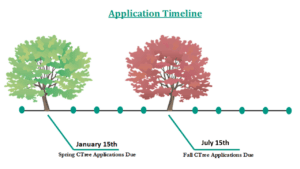
CTree and its partners invite organizations and agencies to apply for CTree kits to organize, coordinate, and implement urban tree plantings through a competitive grant process.  Twice annually groups can apply for CTree Kits for spring and fall plantings.  CTree Kits include:

bullet

Trees in a variety of species and stock sizes for Shade, Reforestation, etc.   

bullet

Tree tubes or cages to protect from deer; and   

bullet

Mulch to foster good root growth


Successful CTree applicants will receive technical assistance from CTree partners and the WV Division of Forestry.  Any interested group that is dedicated to increasing urban canopy cover in the Potomac Basin is eligible to apply (with or without prior experience planting trees).  Follow this link to see a map of priority planting sites.


CTree is designed so any volunteer group or public entities, regardless of experience, can apply for help from CTree and the WV Division of Forestry.  We want your group to apply and join the growing number of volunteers who are making their communities more beautiful and health by planting trees.  CTree applications include: 

bullet

Cover Letter: General information about your group, including group name & address, project leader & location, etc.

bullet

Proposal: More in depth information about their organization (structure, number of members, past tree planting experience), details on the proposed project including description of need, objectives, and an explanation of how the project will be evaluated.

bullet

Site Checklist: Checklist for evaluating a proposed planting site including hydrology, topography, current vegetation, and potential conflicts with underground or overhead utilities.

bullet

Tree Maintenance Form: Groups must outline a multi-year plan to maintain the health of the trees through proper watering, mulching, and care.


Grants have now been awarded for the Spring 2012 round of CTree grants.


Useful Resources for grantees:

       In-Kind Rates Sheet (184KB PDF)

       Example of Shade Tree Planning In-Kind Commitment (371KB PDF)

       Example of Reforestation In-Kind Commitment (289KB PDF)

       Example of Invoice for In-Kind (276KB PDF)

       Frequently Asked Questions 


It is the law, call before you dig!  (CTree representatives will help successful applicants with contacting “Miss Utility” to have the planting site inspected.  Background information on Miss Utility.)


The WV Conservation Agency, Eastern Panhandle and Potomac Valley Conservation District, WV Division of Forestry, Cacapon Institute, and other WV Potomac Tributary Team partners are prepared to help your group have a fun and successful volunteer tree planting experience.  Don’t hesitate to contact us to be put in touch with your local CTree representative.


For more information, contact: Cacapon Institute's Urban Forestry Coordinator


The 2012 round of CommuniTree grants is made possible by federal funding from the USDA Forest Service.


WVDOF WVCA CI WVDOH USDA-UCF

CTree PARTNERS


Cacapon Institute - From the Cacapon to the Potomac to the Chesapeake Bay, we protect rivers and watersheds using science and education.

Cacapon Institute
PO Box 68
High View, WV 26808
304-856-1385 (tele)
304-856-1386 (fax)
Click here to send us an email
W. Neil Gillies, Executive Director
Frank Rodgers, Education/Outreach

Website  made possible by funding from The Norcross Wildlife Foundation,  the National Fish and Wildlife Foundation, Virginia Environmental Endowment, NOAA-BWET, USEPA, The MARPAT Foundation, and our generous members.