As Fact Finders, we conduct research to gain insight into watershed issues of
local and regional importance.
As Educators,
we work to create a future where a stream without a buffer looks as out
of place as a smoker in a conference room looks today. To foster that
vision, our environmental education efforts focus on students first and,
through them, the larger community.
As Problem Solvers, we seek
innovative solutions to environmental problems.
Welcome!
|
Environmental Forums
The current eForum is
Oh Deer! 2008, which will run from
October 20 to November 26, 2008.
It is accessed by clicking on the
phone in the High School. Participating
classes seek a consensus
approach
to deer population management that strikes an acceptable balance
between people, deer, and the environment.
*To help students visualize the problems caused by too many deer, we
created a short Flash
slide show about deer impacts on our
forested lands. Take a
look.
Click
here
to learn more about eForums or sign up to participate.
Students from 10 schools in 3 states participated in the Spring 2008 SCE
Forum, and did a tremendous amount of thoughtful work seeking solutions
to the Bay watershed's problems. Their final consensus papers are
now posted. You can see the whole
thing in the Environmental Forum
Archives.
SCE Forum students from Buffalo Gap High School (Staunton,
VA) did an
erosion control project at a nearby elementary school.
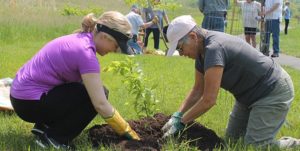
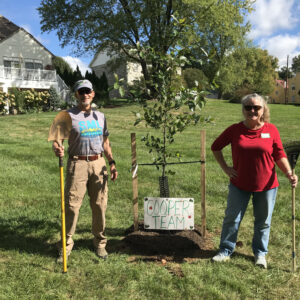
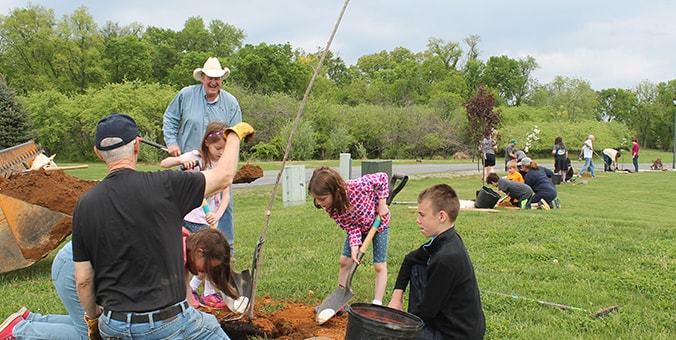
Students from Jefferson High School did a
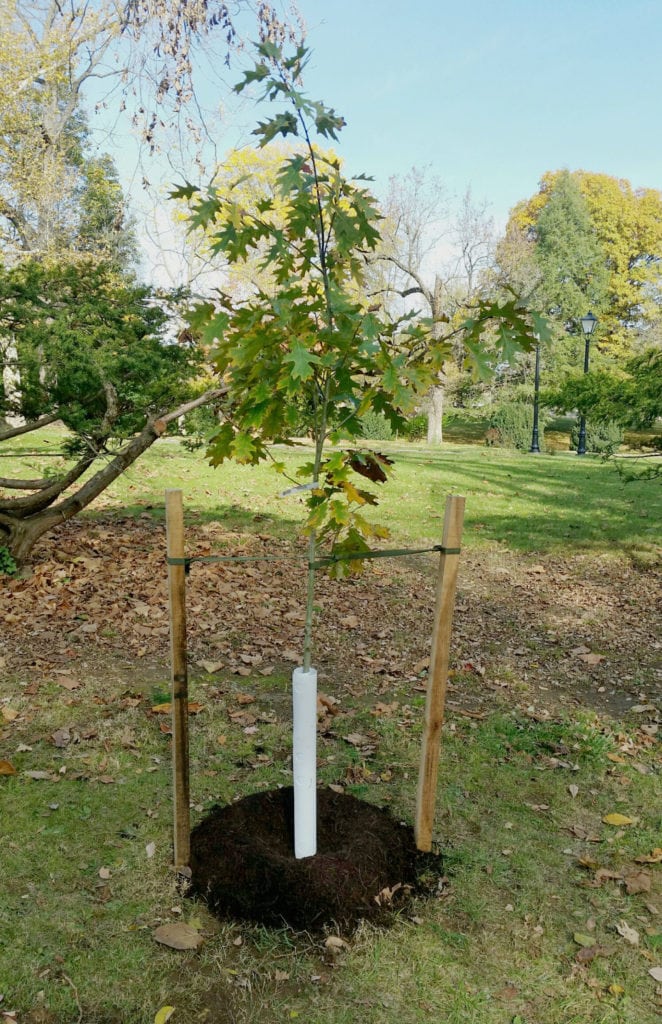
tree
planting project around a constructed wetland. Other students
competed in a bumper sticker contest, which was won by
China Jones at
Rappahannock High School.
 |
Jeffrey Lape,
Director of the Chesapeake Bay Program,
welcomed participants:
"Thank you for your participation. We cannot wait to see the
solutions you discover." |
Deer
exclusion fencing experiment is testing a relatively low cost method to protect riparian forest plantings from
severe damage from deer browsing.
*Cacapon
Institute (CI)
receives $48,683
grant from the National Fish and Wildlife Foundation Chesapeake Bay
Small Watershed Grants Program. The project is titled: “Failure is Not
an Option: Investigating a Cost-Effective Approach to Reducing Deer
Damage in Reforestation Programs.” Read press release
here.
Potomac Headwaters Leaders of Watersheds (PHLOW)
|
Support Cacapon Institute!
Report a Fish Kill
here!
Click here to
read about the WV PTS Forested Riparian Buffer Demonstration Project.
2nd & 3rd year results posted.
-----
Click
here
to view a slide show of the Cacapon River at the time of the Baseline
and today. (Flash, 2 mb)
-----
Farmers as Producers of Clean Water Project
is here.
- - - -
Stream Scholars Summer Camp 2008
was a
resounding success from the Cacapon to the Potomac to the Chesapeake Bay. Take a
look. |